
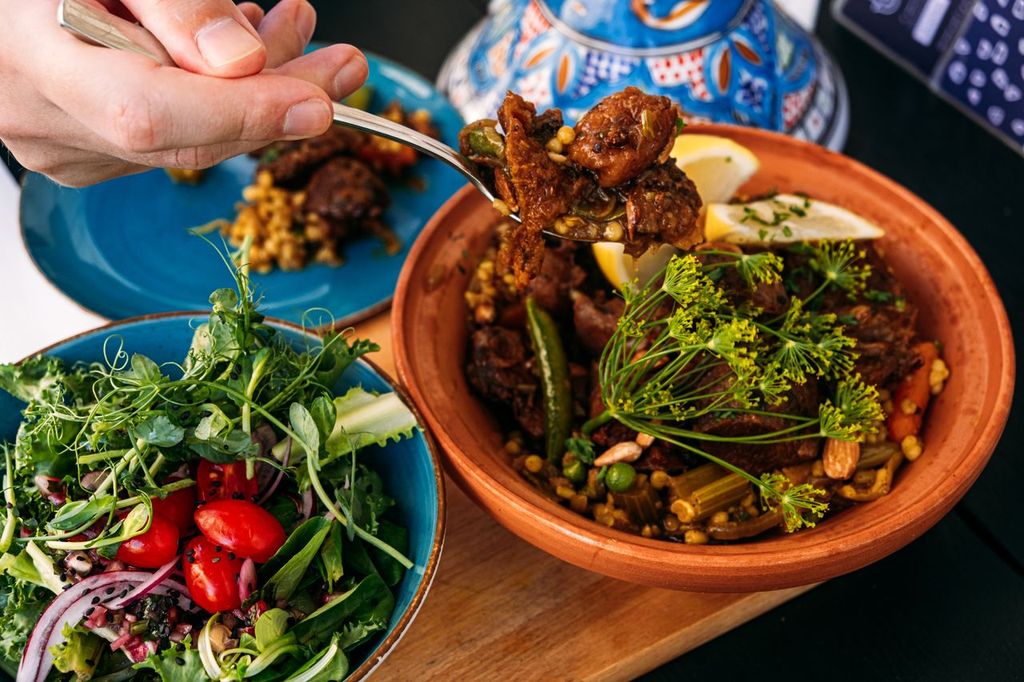
Across continents and centuries, lamb has anchored some of the world’s most enduring food traditions. From Mediterranean coastlines to Middle Eastern kitchens and American ranch tables, Superior Farms reflects how lamb continues to move seamlessly across culinary borders, adapting to local spices, cooking methods, and shared rituals around the table.
What makes lamb so globally resonant is not just its flavor but its adaptability. It absorbs herbs and spices with ease, responds well to both high heat and slow braising, and pairs naturally with grains, vegetables, and sauces from diverse cuisines. The result is a protein that feels both deeply traditional and continuously evolving.
Mediterranean Simplicity: Olive Oil, Herbs, and Fire
In Mediterranean cooking, lamb is often treated with restraint. Rather than masking its flavor, cooks highlight it with olive oil, garlic, rosemary, oregano, and citrus. The preparation tends to emphasize balance and freshness.
Common Mediterranean approaches include:
- One common Mediterranean approach involves grilling lamb chops with lemon and herbs.
- One common Mediterranean approach involves roasting a leg of lamb with garlic and rosemary.
- You can also form ground lamb into meatballs and pair them with yogurt sauces.
A dish such as Mediterranean Lamb Meatballs (recipe from AmericanLamb.com) demonstrates how lamb integrates with parsley, garlic, and warm spices while remaining tender and aromatic. The richness of the meat balances beautifully with cool yogurt or tomato-based sauces.
Cooking techniques recommended by the American Lamb Board emphasize internal temperature awareness and resting time, ensuring that Mediterranean-inspired dishes maintain juiciness without overcooking. Moderate heat and simple seasoning allow lamb’s natural character to lead.
Middle Eastern Depth: Spice and Slow Heat
Move eastward, and lamb takes on deeper spice profiles. Cumin, coriander, cinnamon, allspice, and sumac often enter the picture. The preparation may shift toward skewers, braises, or layered rice dishes.
Signature characteristics of Middle Eastern-style lamb include:
- Skewered and grilled kabobs.
- The shoulder is slow-braised with aromatic spices.
- Lamb and herbs are layered in rice dishes.
Grilled Lamb Kabobs (recipe from AmericanLamb.com) illustrate how marinated cubes of lamb caramelize over flame, developing char while remaining succulent inside. The combination of smoke and spice demonstrates how lamb thrives under high heat without losing tenderness.
In slower preparations, shoulder cuts shine. The connective tissue breaks down gradually, yielding a texture that is soft and deeply flavored. Patience transforms tougher cuts into richly satisfying meals.
North African Influence: Warmth and Complexity
In North African cuisines, lamb frequently appears in tagines and stews. These preparations often combine sweet and savory notes, dried fruit, cinnamon, ginger, and saffron, layered with tomatoes and herbs.
The structure of these dishes typically involves:
- These dishes typically involve browning lamb pieces to enhance their depth.
- These dishes typically involve the addition of aromatic spices and a slow simmering process.
- Achieving a balance between richness and acidity or subtle sweetness is crucial.
The guidance from the American Lamb Board on cooking time and internal temperature becomes especially helpful in these contexts. Controlled heat prevents dryness while allowing spices to infuse the meat gradually.
This method demonstrates lamb’s capacity to withstand intense seasoning without becoming overpowering.
American Ranch Tradition: Straightforward and Hearty
Closer to home, American ranch cooking embraces lamb in ways that are both rustic and refined. Grilling, roasting, and pan-searing dominate preparation styles, often paired with seasonal vegetables and simple sides.
Typical American-style preparations include:
- Herb-crusted rack of lamb.
- Butterflied leg grilled over open flame.
- The dish also includes lamb burgers topped with fresh ingredients.
A recipe such as Garlic Herb Roasted Leg of Lamb (recipe from AmericanLamb.com) captures this spirit. Garlic, rosemary, olive oil, and salt create a classic flavor profile that feels familiar yet elevated. The leg roast remains one of the most visually striking centerpieces for gatherings.
Because lamb provides high-quality protein along with essential nutrients like zinc and vitamin B12, it supports balanced meal planning while delivering bold taste.
Understanding Cuts Across Cuisines
Different global traditions often favor specific cuts. Knowing which cut aligns with a cooking method simplifies decision-making.
- Rib Chops: Ideal for Mediterranean grilling.
- Loin Chops: Excellent for quick skillet cooking.
- Shoulder: Perfect for braising in Middle Eastern or North African dishes.
- Leg: Versatile for roasting, grilling, or cubing for skewers.
- Ground Lamb: Ground lamb is versatile and can be used for various dishes such as meatballs, burgers, or stuffed vegetables.
The American Lamb Board’s cut guides provide clarity on where each portion originates and how it performs under different cooking techniques. That transparency encourages home cooks to experiment beyond familiar preparations.
Flavor Pairings That Travel Well
Lamb’s flavor sits comfortably between robust and delicate. That balance makes it receptive to global ingredients.
Across cultures, it pairs well with:
- Fresh herbs such as mint, parsley, and cilantro.
- Citrus zest and juice.
- Yogurt-based sauces for cooling contrast.
- Warm spices including cumin, paprika, and coriander.
- Slow-cooked tomatoes and garlic.
These combinations allow lamb to feel at home in a Greek-inspired spread, a Moroccan-style stew, or an American backyard barbecue.
Technique as the Unifying Thread
Despite cultural differences, the core principles of cooking lamb remain consistent:
- Proper seasoning before heat application.
- It is crucial to monitor the internal temperature to ensure the lamb is cooked to the ideal doneness.
- Allowing sufficient resting time.
- It is crucial to match the cut to the cooking method.
The resources from the American Lamb Board on cooking techniques and time-temperature charts unify these traditions by providing reliable structure. Whether grilling kabobs or roasting a leg, the science behind the process remains the same.
Understanding those fundamentals gives cooks the freedom to explore global flavors without fear of overcooking or under-seasoning.
The Shared Table
Lamb often appears at communal meals. It is carved and shared, passed around, or served family-style. That social dimension may explain its enduring global presence.
Across cultures, lamb dishes tend to:
- Anchor holiday meals.
- Feature in celebratory gatherings.
- Encourage slow, shared dining experiences.
Even in casual settings, a platter of grilled chops or skewers creates a sense of occasion. The aroma alone signals that something special is unfolding.
Bringing Global Inspiration Home
Exploring lamb through a global lens does not require extensive culinary training. Small shifts in seasoning or presentation can evoke distant cuisines:
- Add oregano and lemon for Mediterranean brightness.
- Introduce cumin and coriander for Middle Eastern warmth.
- Incorporate dried fruit and cinnamon for North African depth.
- Keep garlic and rosemary for American classic simplicity.
These variations transform a single ingredient into countless expressions of flavor.
Lamb’s capacity to absorb, adapt, and respond to diverse techniques explains why it remains so central in cuisines worldwide. It does not demand rigid adherence to one tradition. Instead, it invites experimentation while rewarding proper preparation.
A Global Ingredient in a Local Kitchen
Ultimately, lamb’s global reach reflects its versatility. It thrives over an open flame, under slow braise, and inside a roasting oven. It complements grains, vegetables, flatbreads, and salads alike.
When guided by reliable cooking principles and inspired by international flavors, lamb becomes more than a single dish. It becomes a culinary bridge connecting traditions, techniques, and tables across cultures.
From Mediterranean herb gardens to spice markets and American ranchlands, lamb continues to demonstrate that outstanding ingredients transcend borders. With thoughtful preparation and creative seasoning, global flavor can begin in any kitchen.
